Paver cleaning & sealing in Parkland, FL.
Strip the failed sealer, deep clean, re-sand the joints, then seal — in that order. Sealer is a clear coat, so whatever is on your pavers when it goes down stays there. We lock in the color, not the dirt.
✓ Cleaned before sealed, always · ✓ Joints re-sanded · ✓ Wet look or natural finish
Sealer locks in whatever's underneath it.
Paver sealer is a clear coat. That's the whole thing you need to understand before anyone quotes you a price. Whatever is sitting on those pavers the moment it goes down — dirt, mildew, an old oil shadow, washed-out joint sand — gets sealed in, and it stays there for years.
Which is why "paver sealing" quoted as a standalone service should make you cautious. Cleaning isn't an add-on bolted to the front of a sealing job. It is the first half of the job, and if a quote doesn't clearly include stripping, cleaning and re-sanding, you're being priced for half the work.
The sequence that actually works: strip any failed or clouded sealer, deep clean the pavers, let them dry fully, re-sand the joints with polymeric sand, then seal. Skip the drying and you trap moisture, which is exactly what causes that milky white haze you've seen on driveways around here.
Done properly, sealing earns its keep four ways: it slows the UV fade that turns South Florida pavers grey, it keeps oil and leaf tannin sitting on the surface instead of soaking in, it stops joint sand washing out in heavy rain, and hardened joints leave weeds and ants far less to work with.
What we seal, and how.
Same four-step process every time. What changes is the sealer, and around a pool that choice matters more than most people expect.
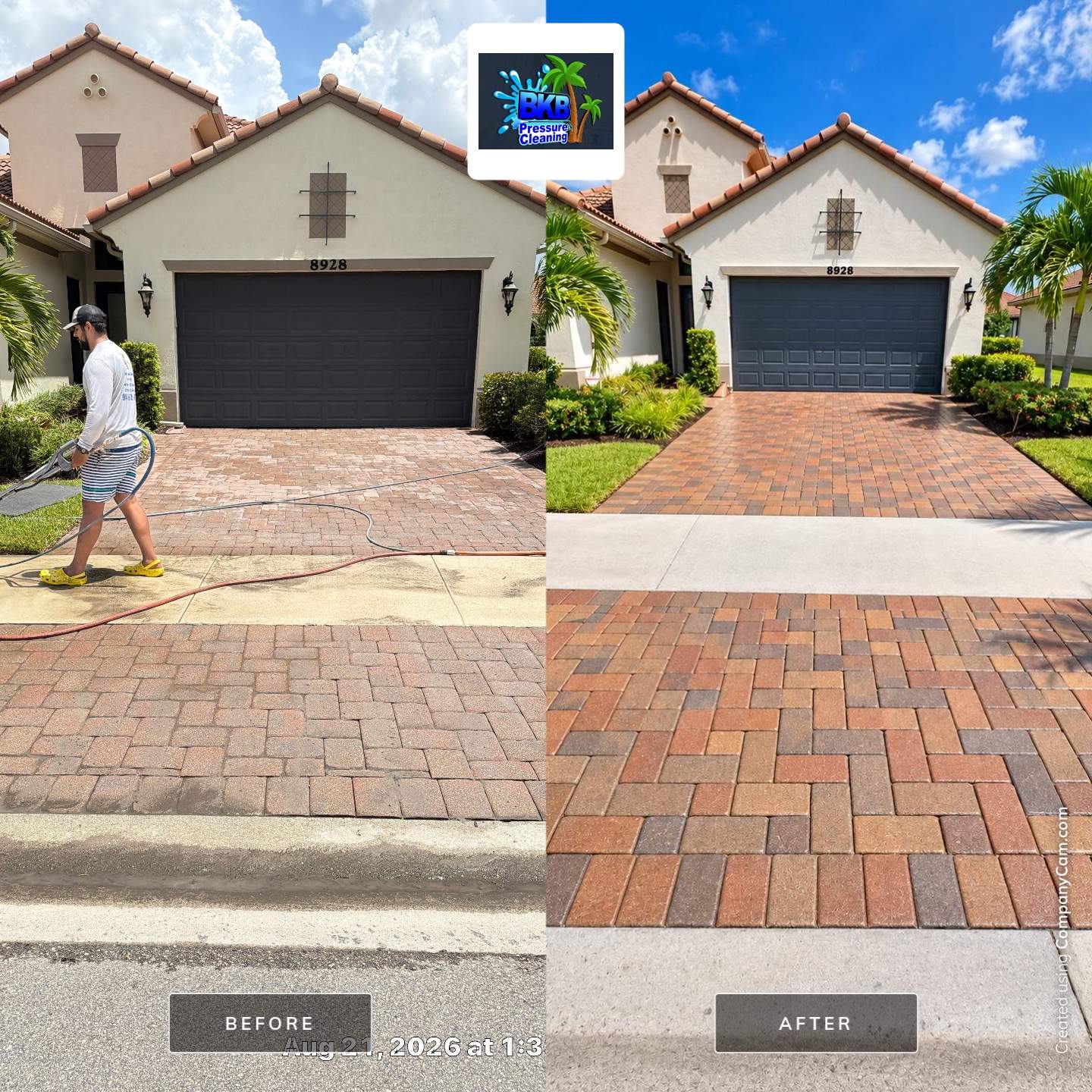
The hardest-working pavers on the property — tire traffic, direct sun, oil drips and the most UV fade. Stripped, cleaned, re-sanded and sealed. Driveways sit at the shorter end of the resealing cycle for exactly these reasons.
Get a paver quote →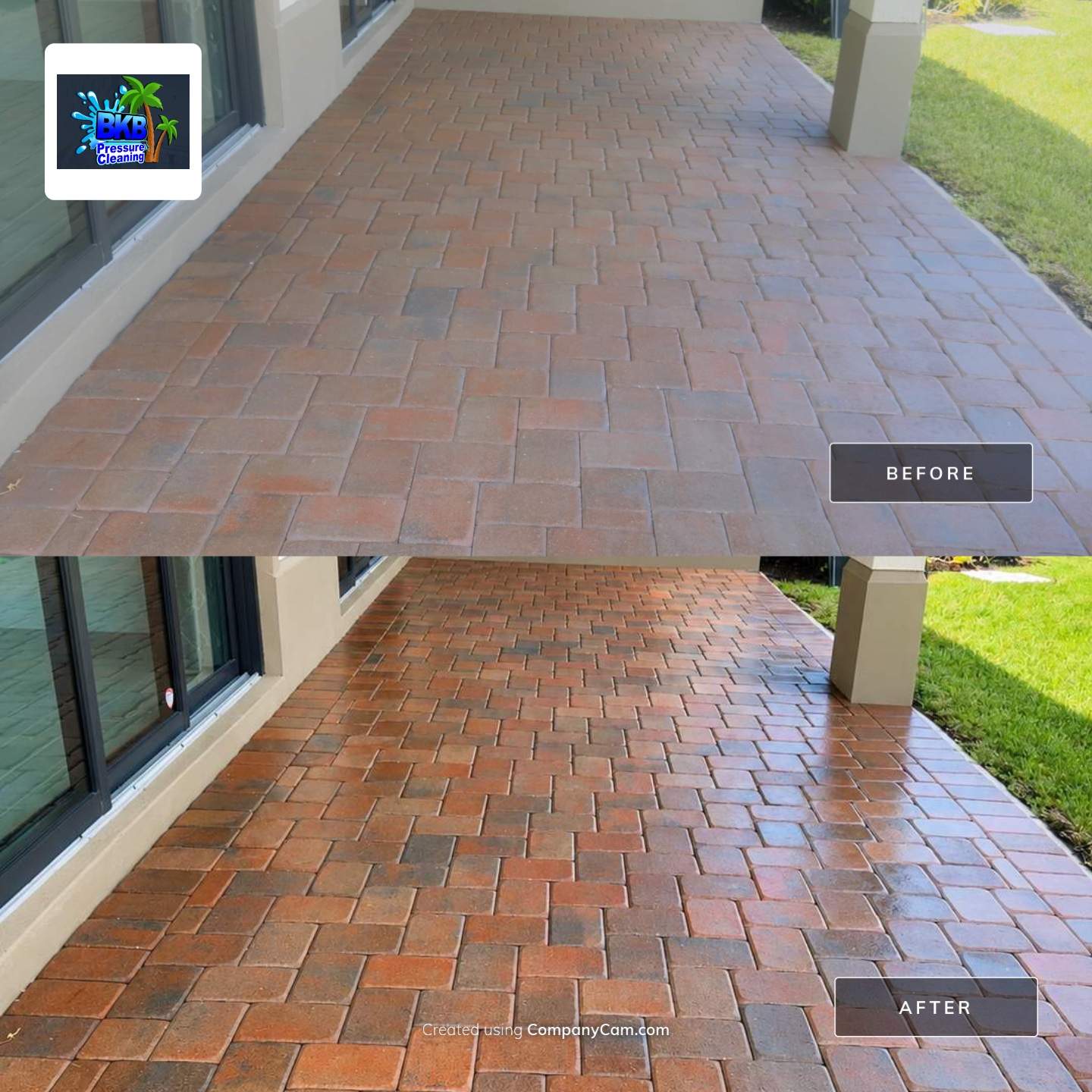
Around water, sealer choice changes. A high-gloss wet look can be slick underfoot, so pool surrounds usually get a natural finish or a slip-resistant additive. We'll show you both finishes before committing to either.
Get a paver quote →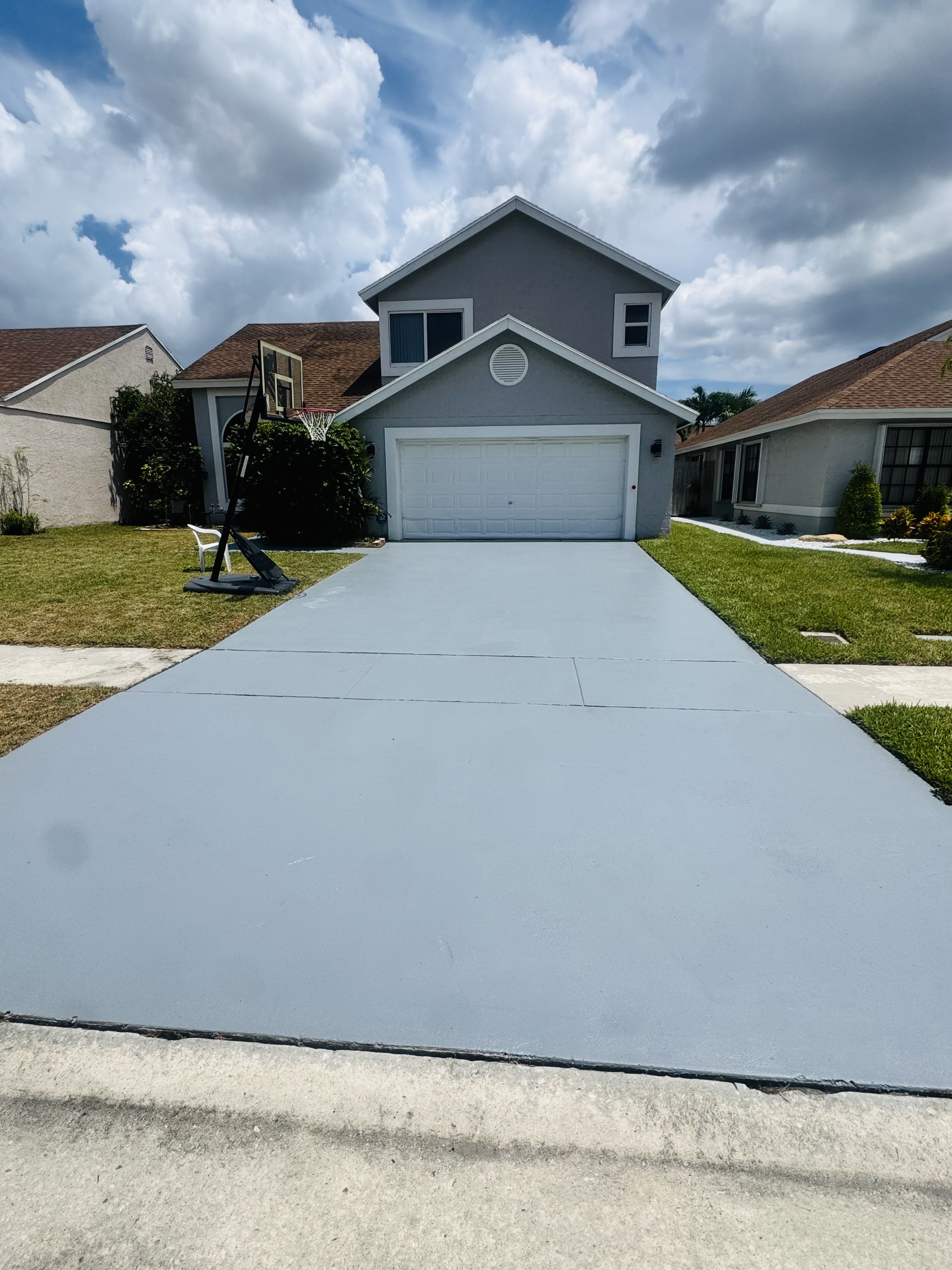
Not every hardscape is pavers. Plain concrete can be stained to a uniform color and sealed — a far cheaper way to fix blotchy, patched or permanently stained concrete than tearing it out and repouring.
Get a paver quote →Got cloudy white patches on an old seal? Call (954) 692-3107 — that's trapped moisture, and adding another coat on top makes it worse. It needs stripping.
Seal the pavers while we're already there.
Sealing requires a full clean first — so if you're having the exterior done anyway, the cleaning half of the sealing job is already happening. Booking them apart means paying to clean the same pavers twice, months apart, for no reason.
Driveway Cleaning + Sealing
The obvious one. Cleaning is step one of sealing, so having them done separately means paying for the same work twice. If sealing is even a maybe, mention it when you book the cleaning.
See driveway cleaning → Right orderHouse Wash + Pavers
House runoff lands on the pavers, so the house has to be washed before they're cleaned and sealed — otherwise you're sealing in dirt that hasn't fallen yet. One visit, right order.
See house washing → Full exteriorThe Full Exterior
One crew, one visit, one invoice, in the right sequence — roof, house, gutters, windows, driveway last. This is what most of our repeat customers book once a year and forget about.
See all services →Not sure what your home needs? Call (954) 692-3107 — we'll tell you what's worth doing now and what can wait.
Paver sealing across Broward & Palm Beach.
Paver driveways, patios and pool decks throughout our service area. Tap your city for local details.
The four steps, in this order.
1. Strip & clean
Any failed or clouded sealer comes off first — you can't seal over it. Then a deep clean of the pavers themselves, with rust, oil and organic staining pre-treated separately, because pressure alone won't lift them.
2. Dry completely
The step everyone rushes, and the reason most seals fail. Pavers have to dry fully before sealer goes on — trap moisture underneath and you get the milky white haze you've seen on driveways around here. That usually means coming back another day.
3. Re-sand, then seal
Joints refilled with polymeric sand and activated, then sealer applied in your chosen finish. Sealing over depleted joints leaves pavers free to shift, so re-sanding isn't optional. We walk it with you before packing up. Licensed and insured, COI for any HOA.
Straight answers, no pressure.
Not sure if your pavers need resealing? Pour a little water on them — if it soaks straight in instead of beading, the seal is gone.
Call (954) 692-3107Do pavers need to be cleaned before sealing?
What does sealing pavers actually do?
How often do pavers need resealing?
My old sealer looks cloudy or white. Can that be fixed?
What is polymeric sand and do I need it?
Wet look or natural finish?
Can you seal a pool deck?
Color locked in, not the dirt.
Every one of these was photographed on site by our crew. No stock photos, no staging — just the pavers before we touched them and the same pavers sealed.
DRIVEWAY SEALING · Before & after
PATIO SEALING · Before & after
CONCRETE STAINING · Grey finish
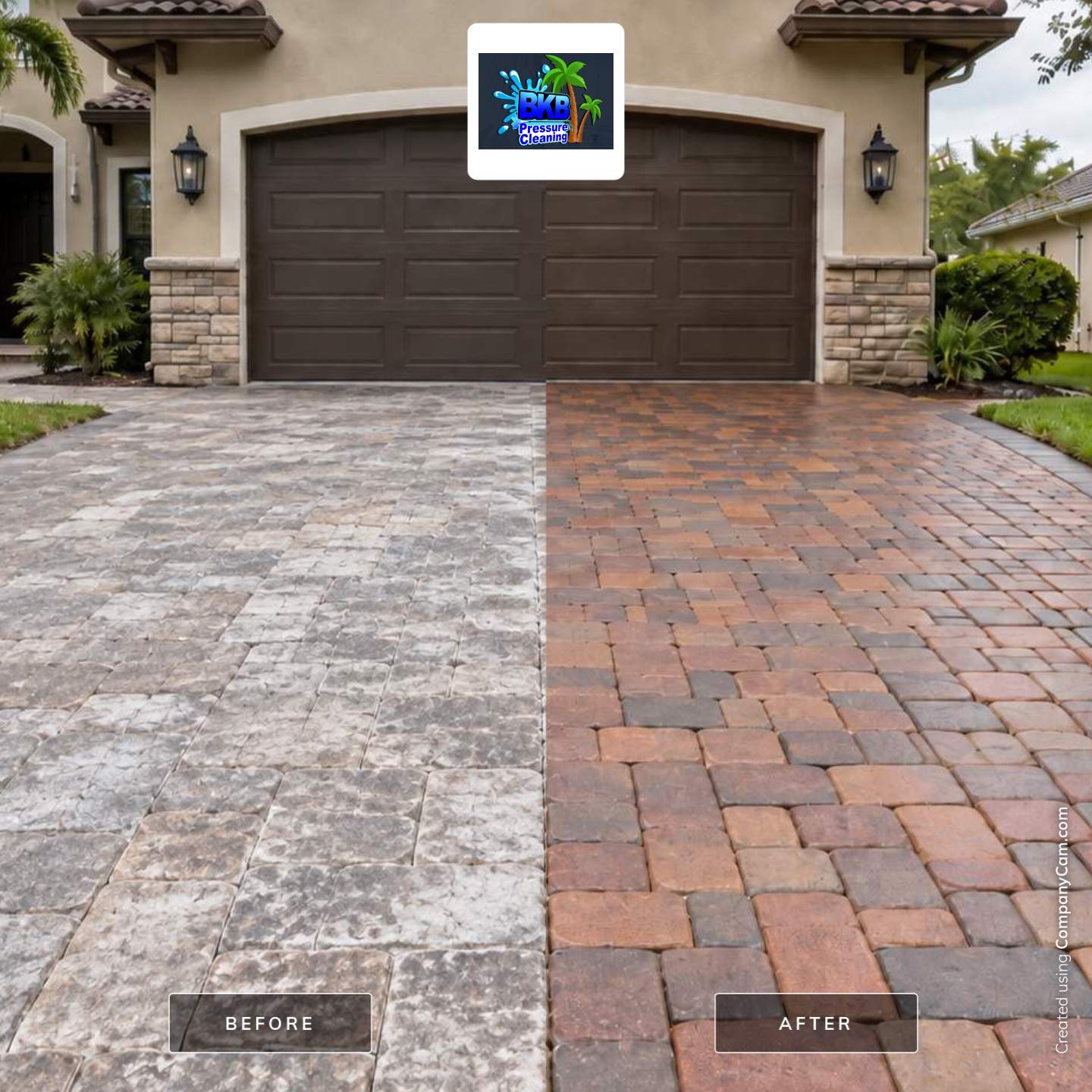 FAILED SEALER · Stripped & resealed
More completed work on our recent projects page.
Ready to lock the color back in?
Tell us your address and what you need cleaned. We'll get back to you fast — usually within the hour during business hours.
- 100% free, no-obligation estimate
- Cleaning and sealing in a single visit
- Honest pricing — never any upsell pressure
Request Your Free Estimate
Takes about 30 seconds. No site visit needed for most jobs.